

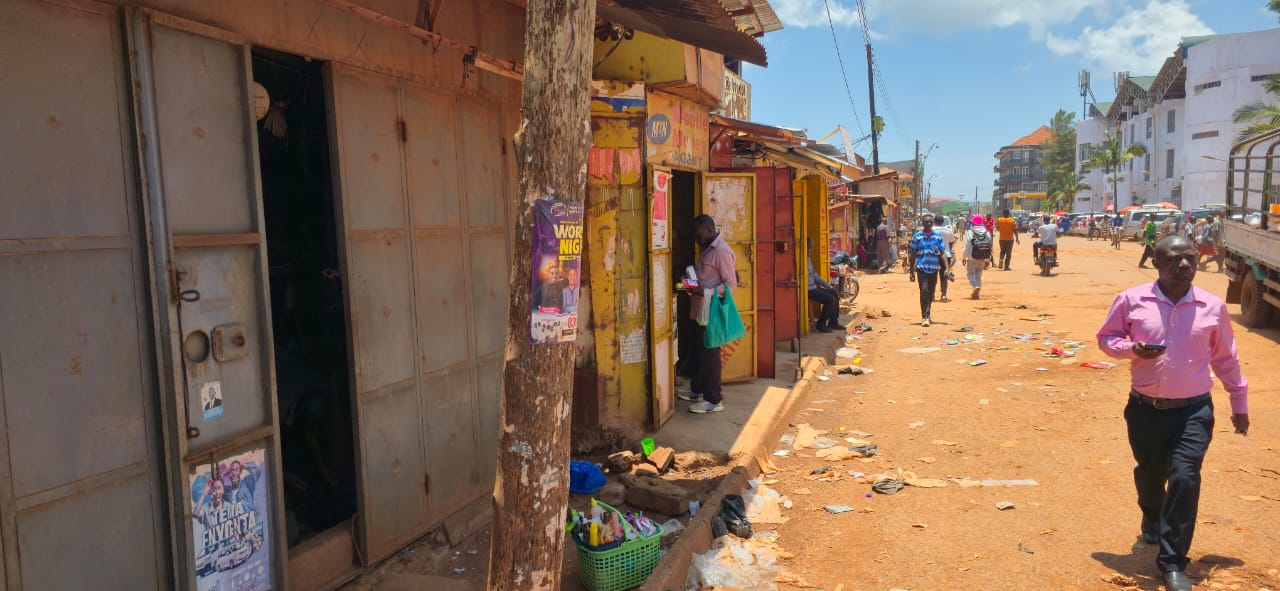
Authorities in Jinja have confirmed that the eviction of vendors and removal of illegal structures in road reserves will continue in most parts of the city, despite an ongoing court case challenging the exercise by traders at the city’s main transport hubs.
The clarification follows a temporary court injunction obtained by vendors operating in Jinja Taxi Park and the nearby bus park, which halted their eviction pending the hearing of a legal challenge against the city council.
The traders, through their lawyer Sharif Ssemaganda of Graven Advocates, argued in court that the eviction notice issued earlier this month was unlawful.
However, city officials say the injunction only affects the two transport parks and does not stop enforcement operations elsewhere in the city.
“The court stopped us only in the Taxi and Bus Parks, but the rest of the areas we shall continue enforcing the trade order,” said Rajab Kito, spokesperson for Jinja City Council.
Kito added that enforcement operations had already begun, but authorities found that many traders had voluntarily vacated the affected areas and demolished their structures.
“Today we started the operations, but we found that the majority of people had already vacated and removed their illegal structures on their own,” he said.
The dispute stems from commitments made by city authorities in 2020, when then-mayor Majid Batambuze issued a formal communication assuring vendors, motor mechanics, taxi operators, and kiosk owners that evictions would only occur after consultations and identification of alternative spaces.
In a letter dated October 14, 2020, Batambuze stated that plans to decongest the city’s central business district would only proceed after consultative meetings and identification of suitable relocation areas for affected operators.
The enforcement office was also directed to halt any eviction operations until consultations were completed.
The vendors further rely on a council meeting extract from June 19, 2020, which resolved that redevelopment of Jinja Taxi Park would be undertaken under a public-private partnership involving the traders.
According to the resolution, Awaken Busoga Initiative, in partnership with the Jinja Taxi Park Kiosk Owners and Operators Association, was expected to collaborate with the then Jinja Municipal Council to modernize the taxi park facility.
The latest confrontation began on March 2, 2026, when the Jinja City Town Clerk issued a notice giving vendors only 12 days to vacate road reserves and illegal structures.
The deadline expired on March 14, prompting immediate enforcement operations.
Affected traders, however, secured a temporary injunction from the High Court of Uganda through Deputy Registrar Robert Mukanza, stopping eviction of vendors in the taxi and bus parks until the matter is heard.
When the case came up for hearing on Monday, lawyers representing the defence from the Attorney General’s Office requested more time to file their response.
The court granted the request and extended the interim order until May 7, when both parties are expected to return for further hearing.
Leaders of the vendors insist they will continue pursuing the matter in court to defend what they say are earlier agreements with city authorities.
“We have held several meetings with city authorities where we discussed developing Jinja Taxi Park, but all the efforts are yet to materialize,” said Karim Mukama, chairperson of the Jinja Taxi Park Kiosk Owners and Operators Association.
Mukama added that traders feel betrayed by the eviction notice despite earlier assurances that they would be given priority when the redevelopment process begins.
“They promised that when they want to develop this area we shall be first priority, but we are wondering why they are giving us an eviction notice when we have been partners with council,” Mukama said.
Despite the ongoing legal battle, city authorities maintain that the broader campaign to decongest the central business district will continue as planned in other parts of Jinja.
